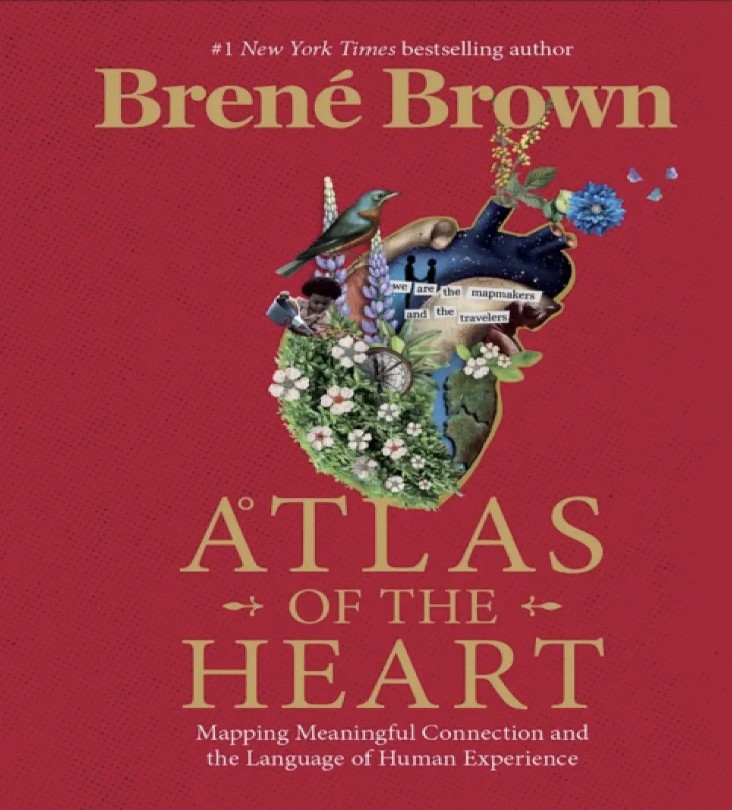
Many people just LOVE Brene Brown. Stu at D3 is one of them. She talks with humour and compassion about vulnerability and shame and empathy, and millions watch and listen. She is easy to listen to. So, I “read” this book first as an audiobook. Brene takes several emotions and does a deep dive on each one, often clarifying the differences and similarities between different emotions. It struck me as I was listening that the book would serve well as reference material and so I bought the hardback. It’s beautiful and sets out each chapter with highlights, pictures and photos that bring the topics to life.
13 chapters address emotions grouped as “places we go when…”
- Things are Uncertain or Too Much
- We Compare
- It’s Beyond Us
- Things Don’t Go as Planned
- Things Aren’t What They Seem
- We’re Hurting
- With Others
- We Fall Short
- We Search for Connection
- The Heart is Open
- Life is Good
- We Feel Wronged
- We Self-Assess
I was particularly taken with Brene’s comparison of the emotions Compassion, Empathy and Sympathy.
“Compassion is fuelled by understanding that we’re all made of strength and struggle – no one is immune to pain or suffering, Compassion is not a practice of ‘better than’ or ‘I can fix you’ – it’s a practice based in the beauty and pain of shared humanity.”
“Empathy is a tool of Compassion. We can respond empathetically only if we are willing to be present to someone’s pain. If we’re not willing to do that, it’s not real empathy. We need to dispel the myth that Empathy is ‘walking in someone else’s shoes’. Rather than walking in your shoes, I need to learn how to listen to the story you tell about what it’s like in your shoes and believe you even when it doesn’t match my experiences.”
“Sympathy is the near enemy [see below] of Empathy. Rather than being a tool for connection, sympathy…is removed: When someone says, “I feel sorry for you’ or ‘That must be terrible,” they are standing at a safe distance…Sympathy and Pity are first cousins.”
I also loved the chapter on Cultivating Meaningful Connection. Brene describes Connection as “…the energy that exists between people when they feel seen, heard, and valued*; when they can give and receive without judgment; and when they derive sustenance and strength from the relationship.” She then explores Skillsets for Cultivating Meaningful Connection and their Far Enemies (their opposites) but also their Near Enemies (they look like it but are not it).
For example, a skillset for Cultivating Meaningful Connection is ‘The Courage to Walk Alongside’. Its Far Enemy is ‘Walking Away’ but we must also beware its Near Enemy which is ‘Controlling the Path’.
*Incidentally, if you are interested in a thoughtful discussion on Why People Need to Feel They Matter at Work, I would recommend the Lead From the Heart podcast episode (26 June 2026) featuring Zach Mercurio, author of The Power of Mattering. [Link]
At D3 Partnership we are continually examining our approach to Executive Coaching so that the time spent with our coachees is maximised and worth the investment of time and money.
Get in touch with D3 Partnership to learn how we integrate our understanding of emotions – and how they make you show up at work into our executive coaching programmes.
Samantha Peat, Executive Coach