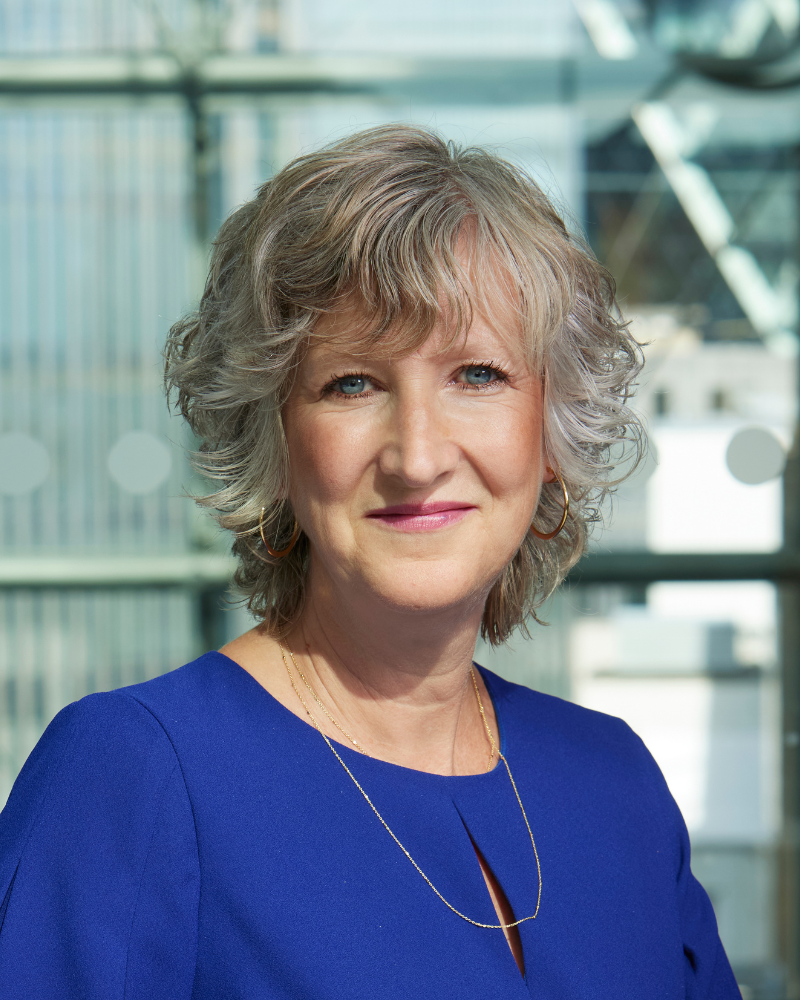
I was incredibly fortunate that, as I was rising through the ranks and taking on C-suite roles, including CEO of two insurance companies, my husband made the decision to step back from his self-employed carpentry business and become a full-time househusband.
Our boys were around eight and fourteen at the time, and we had this arrangement for about six years.
It made an enormous difference to my career.
I could leave the house just before 6am, get to my desk before most of my colleagues and have uninterrupted time to focus on strategic matters, calendar management and planning for upcoming Board meetings.
I was no longer doing the school drop-off and then racing to Romford station for the 9.02am fast train. I could focus on my job knowing that things at home were taken care of. And if a key client extended a last-minute invitation to dinner or drinks, I didn’t immediately have to start working out who was going to be where and when.
It also taught me one very important lesson: if you’ve had a large client lunch, tell the person at home before they spend an hour preparing a dinner you aren’t going to eat!
I loved those years, and I was enormously proud of my husband. The relationship that he and our youngest son developed during that period was incredibly special, and remains so today.
I’ve had the privilege of talking to school children about my career over the years, and I’ve always enjoyed telling them that my husband was a househusband. Not because I think there is one “right” way for a family to organise itself, but because I wanted young people to see that traditional gender roles don’t have to determine whose career takes priority or who takes responsibility for the home.
My husband was completely comfortable with the decision we’d made, despite the occasional ribbing from his former workmates: “What are you going to do all day – watch Loose Women?!”
He’ll tell you he loved that period too.
Initially, he tried to make everything perfect. I’d come home to plumped cushions, scented candles and a hearty meal simmering on the stove. Eventually, he discovered what generations of people running homes and caring for families already know: perfection is exhausting and largely unattainable.
He learned to be kinder to himself. He did what needed doing and made sure there was also time for something that mattered to him – usually a couple of hours of drum practice.
I was very conscious of expressing my gratitude because so much of the work involved in running a home can be invisible and thankless. You finish one job only for it to need doing again. Or you spend an hour preparing something that your family demolishes in five minutes – we eat fast in our house!
I remember telling some girlfriends how grateful I was for everything my husband did. One of them replied:
“That’s funny. I do all those things at home too and my husband never thinks to tell me what a good job I’m doing.”
That stayed with me.
Our arrangement worked for us for six years. It won’t be the right choice for every family, nor does it need to be. But I do think we need to broaden our idea of what a successful family and a successful career can look like.
When I spoke at school assemblies, the message I wanted young women to hear was: be ambitious, and choose a partner who supports your ambitions.
And to the young men: don’t assume that your career automatically has to take priority. Supporting a successful partner and taking the lead at home can be an equally valuable choice.
I have long believed that if we want to see more women progressing into senior leadership and C-suite positions, we also have to talk about what happens outside the workplace.
Organisations can create inclusive policies, flexible working arrangements and career development opportunities, but domestic and caring responsibilities still have a significant influence on people’s ability to pursue demanding careers.
That’s why I think we should talk much more openly about men who choose to take the lead at home.
Not because every ambitious woman needs a househusband. And certainly not because there is one model that works for every family.
But because genuine equality means giving couples the freedom to decide what works for them – without assumptions about which partner “should” earn, care, cook, work, lead or stay at home.
And perhaps we should do more to support the men who make that choice too.
That’s why D3 Partnership is offering three FREE one-hour coaching sessions to househusbands.
We want to celebrate and support men who have chosen to take a leading role at home, while also helping them think about their own identity, ambitions, development and what comes next for them.
Because supporting one person’s ambitions shouldn’t mean forgetting about the ambitions and potential of the person supporting them.
And when both people in a partnership have the opportunity to thrive, everybody benefits.
If you know a househusband who might value three free one-hour coaching sessions, we’d love to hear from them. Please get in touch with us at D3 Partnership.
Sam Peat, Executive Coach