Coaches are always learning and developing. Sometimes it’s a simple as meeting accreditation targets but more often than not it is because coaches, by their very nature, are curious and inquisitive and will never get to a stage where they believe they know it all.
There are many textbooks and research journals available, condensing study, theory, frameworks and models for coaches to digest and adopt.
And then some books from outside the coaching sphere catch my attention and I wonder if the hype is deserved.
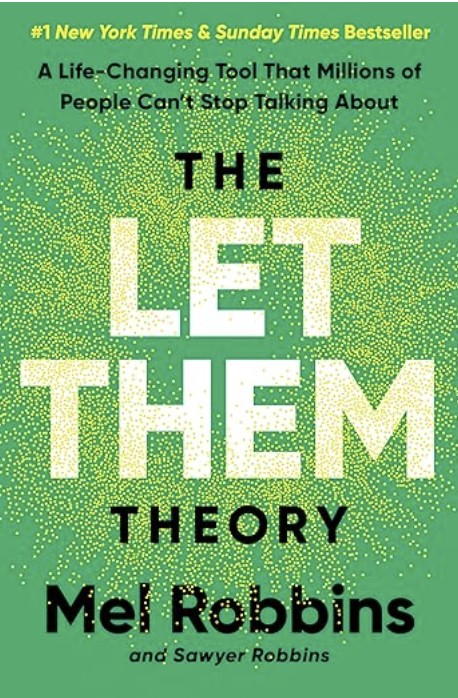
Mel Robbins’ The LET THEM Theory is one that does deserve its bestseller status, in my opinion. Having reached notoriety with her “5 Second Rule” work, Mel focuses in this book on the power of accepting that you cannot control what other people say or do and it is better to “let them” do what they do rather than try to change, manipulate or fix them.
Those who have been coached will be familiar with the “circle of control” – there are things in our life over which we have control (our own behaviour), there are things which we can influence (group decision-making) and then there are things over which we have no control (the weather). The toughest concessions tend to be acceptance that we have no control over what other people do or say. We can only change how we react to what they do or say.
This is where Mel Robbins’ “let me” part of her theory comes into force. Once you stop wasting time and energy trying to change other people you can focus on taking responsibility for your own thoughts and actions – you can become more self-aware, more compassionate, less judgemental and more empowered.
It’s a simple concept and I wasn’t convinced that a full book on the topic would be necessary but it is an easy, interesting and relateable read.
The book shows how “let them” and “let me” can be applied to stress, other people, comparison and even love.
My favourite section tells of a weekend when Mel is double-booked and, trying to please two groups of people, decides to spend limited time with each group. However, this leads to individuals in both groups feeling snubbed by the amount of time Mel is able to share with them. Rather than feel resentful, upset, bitter or angry about their disappointment Mel “lets them” be disappointed – that’s up to them – she knows that her “let me” choices were thought through with compassion and she did her best and so she can be proud of herself.
Of course, the ”let them” theory applies equally to work situations as it does to personal dynamics and, adopted consciously, can be a game changer in the workplace. Coaching is the perfect scenario to explore such ideas. If you have some “let them, let me” examples that could be developed in Executive Coaching and you are looking to transform your behaviour in an impactful and long-lasting way, please contact me, samantha@d3partnership.co.uk.
Samantha Peat, Executive Coach